How to Stop Nails from Breaking and Peeling at the Same Time
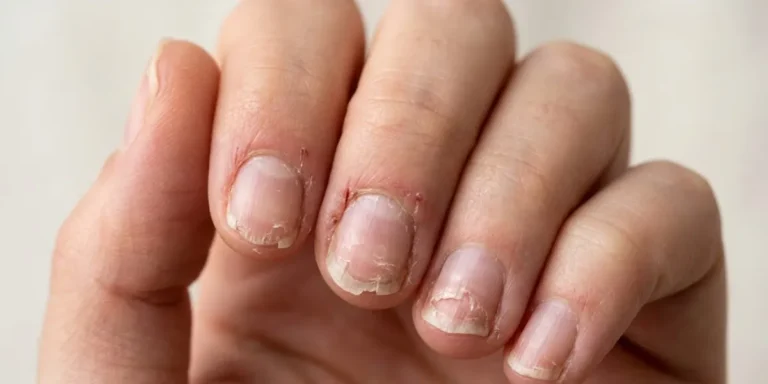
You clip a nail. It breaks sideways before the clipper even closes. You file the edge smooth. The tip starts peeling two days later. You apply nail hardener. It chips off and takes a layer of your actual nail with it.
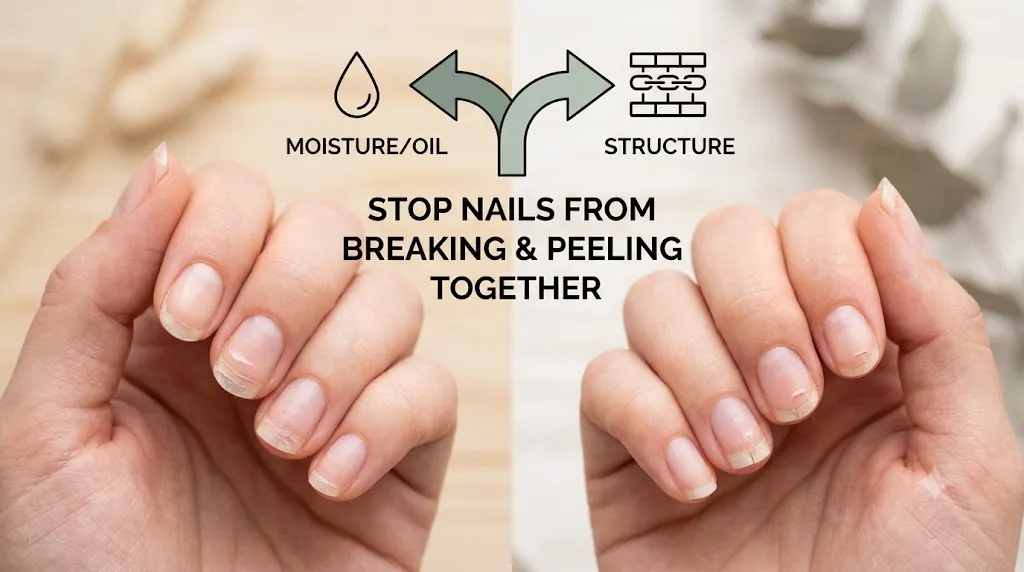
Breaking and peeling at the same time is not just frustrating it is a specific signal that your nails are dealing with two distinct problems simultaneously. One is a moisture problem. The other is a structural problem. Most guides treat them as separate issues. They are not. They share the same root causes, and fixing them requires the same set of changes applied consistently.
This article covers exactly what causes of nails to peel and break at the same time, what you can do starting today for stop nails from breaking and peeling , and what products and habits actually work backed by dermatology research, not beauty marketing.
Quick summary
- Breaking and peeling together almost always means your nails are both dehydrated and structurally weakened — two problems that need to be fixed simultaneously, not separately.
- The most common combined causes are repeated water exposure, acetone overuse, iron or biotin deficiency, and physical trauma.
- Switching from lotion to oil, wearing gloves during wet tasks, and keeping nails short are the three fastest changes with the biggest impact.
- Most people see clear improvement within 4 to 6 weeks of consistent care.
- If both your fingernails and toenails are breaking and peeling, see your doctor — this pattern points to an internal cause such as iron deficiency or thyroid disorder.
Why Breaking and Peeling Happen Together
Understanding why both problems appear at the same time is the key to fixing them efficiently.
A healthy nail needs two things in balance: flexibility and structural integrity. Flexibility comes from moisture — a well-hydrated nail can bend slightly without snapping. Structural integrity comes from tightly bonded keratin layers layers that resist separation and hold together under mechanical stress.
When nails break easily, it means they have lost flexibility. They are too dry and rigid to absorb impact, so they snap at the free edge instead of flexing.
When nails peel, it means the bonds between keratin layers have weakened. The layers separate horizontally rather than staying tightly packed.
When both happen together, it means your nails have lost both flexibility and structural cohesion at the same time typically because the same underlying causes are driving both problems simultaneously.
The good news is this because the causes overlap, fixing one usually fixes both.
The 6 Most Common Causes of Nails Breaking and Peeling Together
Cause 1: Chronic dehydration of the nail plate
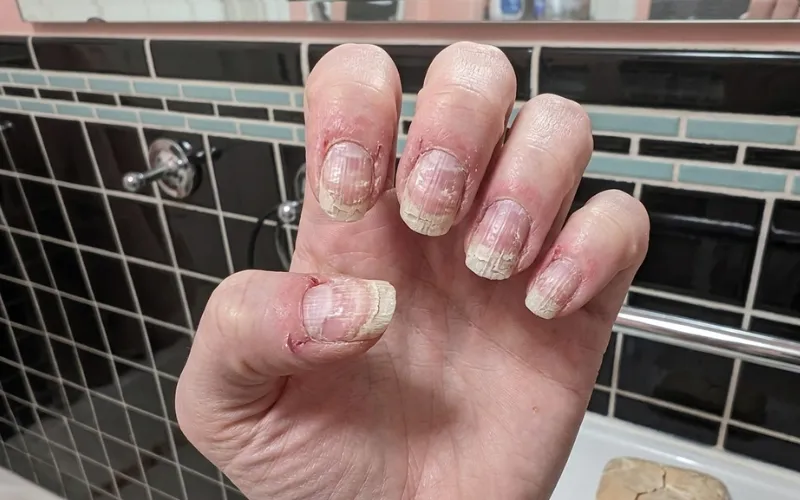
The nail plate is made of approximately 100 layers of keratin cells stacked on top of each other. These layers are held together by lipid bonds essentially, natural oils that act like glue between the layers. When your nails repeatedly get wet and dry out through handwashing, dishwashing, showering, or swimming these lipid bonds are gradually stripped away.
Without the lipid layer, two things happen in sequence. First, the nail loses its flexibility and becomes brittle so it breaks. Second, the layers begin to separate at the tips — so it peels. Both happen for the same reason.
This is the single most common cause of nails that break and peel simultaneously, and dermatologists consistently rank it as the leading culprit in otherwise healthy adults.
How to recognise it: your fingernails are affected but your toenails look normal. Symptoms are worse in winter, after long stretches of handwashing, or after swimming. Peeling starts at the tip and splits in thin horizontal layers.
Cause 2: Acetone and chemical overuse
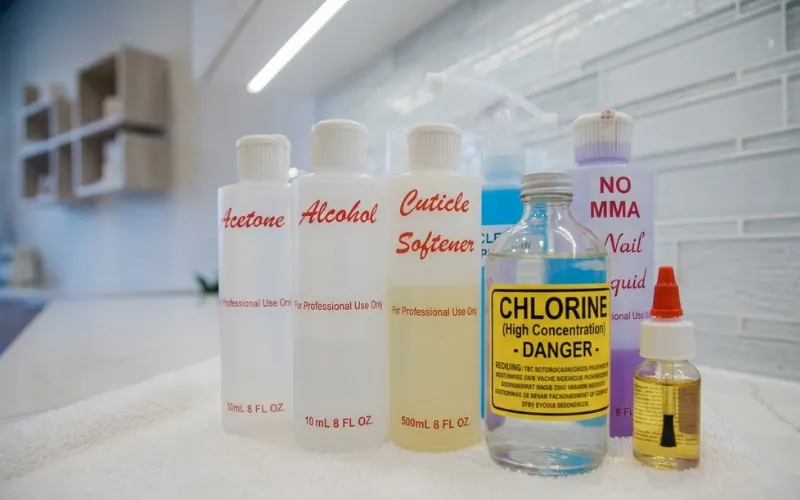
Acetone-based nail polish remover dissolves the lipid layer of the nail plate far more aggressively than water alone. A single acetone removal session leaves the nail plate noticeably drier than before. Weekly acetone use compounds this effect over months until the nail has almost no natural oil remaining.
Household cleaning products, bleach, and chlorinated pool water have the same drying effect through a different mechanism they disrupt the nail’s surface proteins and accelerate moisture evaporation.
The result is the same as chronic water exposure, only faster: brittle nails that snap and peel simultaneously.
How to recognise it: breaking and peeling started or worsened around the time you began wearing gel polish, acrylics, or using acetone remover more frequently. Nails look dull and feel rough even when bare. The skin around your nails and fingertips also feels dry or cracked.
Cause 3: Iron deficiency
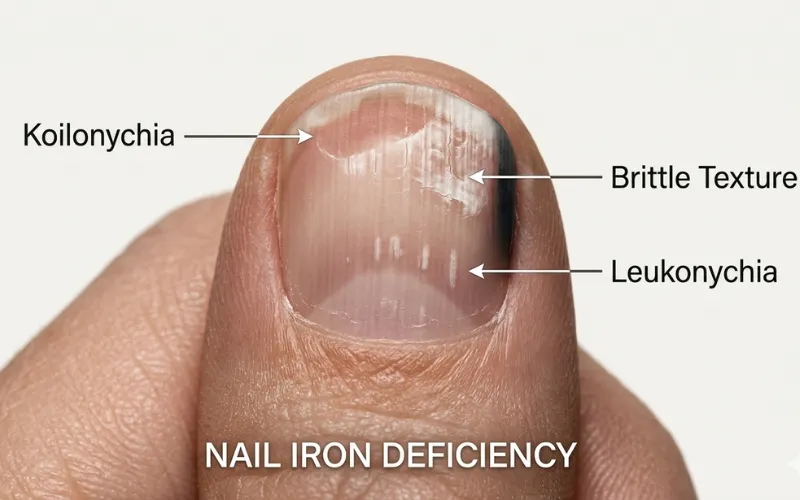
Iron is required to deliver oxygen to the nail matrix the structure beneath the base of your nail where new nail cells are formed. When iron levels fall too low, the nail matrix cannot produce well-formed, tightly bonded keratin. The result is nail cells that are both thinner and more loosely structured than normal which makes them break more easily and peel more readily.
According to the World Health Organization, iron deficiency is the world’s most prevalent nutritional disorder, affecting an estimated 2 billion people globally. It is significantly more common in women of reproductive age, vegetarians, vegans, and people with digestive conditions that affect nutrient absorption.
How to recognise it: pale nail beds that look washed out or whitish rather than pink. Persistent fatigue and low energy even with adequate sleep. Feeling cold in warm environments. Both fingernails and toenails may be affected which points strongly to an internal cause rather than an external one. In more advanced deficiency, nails may develop a concave or spoon-shaped curve, a condition called koilonychia.
Cause 4: Biotin or zinc deficiency
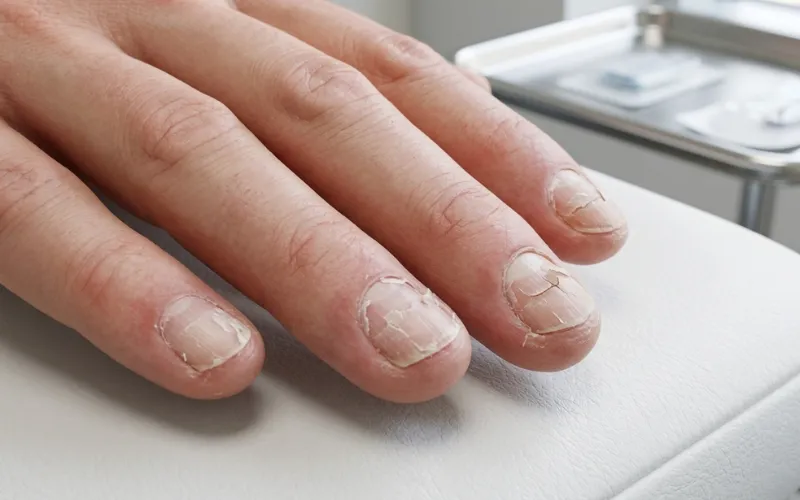
Biotin (vitamin B7) supports the metabolism of the amino acids and fatty acids that form the building blocks of keratin. Without adequate biotin, keratin production is disrupted at the molecular level, producing nails that are structurally weaker and prone to both breaking and peeling.
Zinc plays a similar role it is required for cell division and protein synthesis within the nail matrix. A zinc deficit slows nail growth and reduces the structural density of each new nail cell, leading to thin, fragile nails that fail in both ways at once.
How to recognise it: nails break and peel despite consistent protection from water and chemicals. Nail growth is noticeably slow less than 2 to 3 millimetres per month. You also notice hair thinning, since biotin and zinc deficiency affect both simultaneously. You follow a restrictive diet or have a diagnosed digestive disorder such as Crohn’s disease or coeliac disease.
Cause 5: Physical trauma and mechanical stress
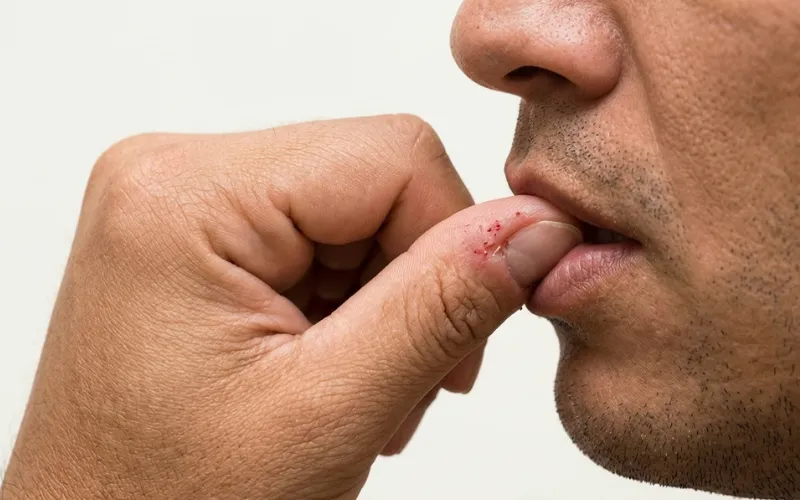
Using your nails as tools to open packages, scrape stickers, pry open lids places repeated mechanical stress on the nail plate precisely at the free edge, which is already the structurally weakest point. This stress does two things at once: it creates micro-fractures that lead to breaking, and it separates the layers at the tip that lead to peeling.
Peeling off nail polish by hand rather than dissolving it with remover is a particularly destructive form of mechanical trauma. When you peel polish off, you remove not just the colour but actual superficial layers of the nail plate. Because fingernails grow only about 3 milli metres per month, this damage can persist visibly for months.
How to recognise it: breaking and peeling is worse on your dominant hand. Damage is concentrated at the tips and sides of nails. You notice the problem worsens after tasks that require physical effort with your hands.
Cause 6: Thyroid disorder (hypothyroidism)
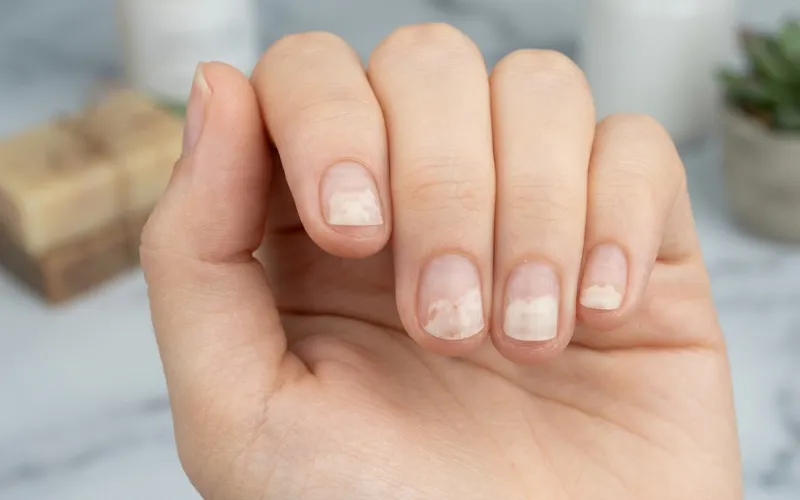
Thyroid hormones regulate the rate of cell turnover throughout the body, including within the nail matrix. In hypothyroidism an underactive thyroid reduced thyroid hormone levels slow down nail matrix activity. The nail cells produced are fewer, more weakly formed, and less tightly bonded, creating nails that are simultaneously prone to breaking under minimal pressure and peeling at the tips.
Thyroid-related nail changes are typically accompanied by a cluster of whole-body symptoms that help distinguish this cause from external factors.
How to recognise it: both fingernails and toenails are affected. Nails grow unusually slowly. Persistent fatigue, unexplained weight gain, hair thinning (including the outer third of the eyebrows), feeling cold, dry skin, and low mood accompany the nail changes. These systemic symptoms alongside nail problems are a reliable signal to see a doctor rather than continue self-treating.
How to Stop Nails from Breaking and Peeling: A Step-by-Step Fix
Step 1: Stop the damage first
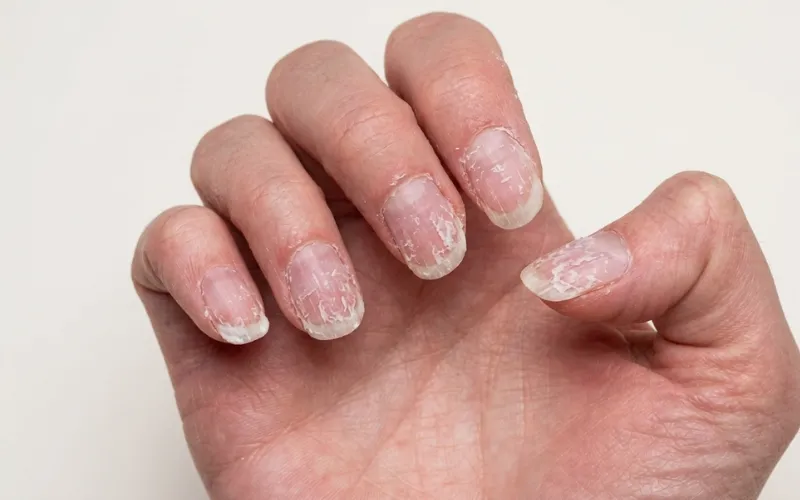
Before adding any products or supplements, you need to stop the habits that are actively causing the damage. Every fix you apply will be undermined if the root cause continues.
- Buy a pack of nitrile gloves and keep them at every sink in your home. Wear them for all dishwashing, cleaning, and prolonged water contact without exception
- Switch from acetone-based nail polish remover to a non-acetone formula immediately
- Stop peeling off nail polish by hand. Remove it properly with remover and cotton pads every single time
- Stop using your nails as tools. Use scissors, a pen cap, or a box cutter instead
- If you wear gel polish regularly, take a complete break for at least 8 weeks to allow undamaged nail to grow through
Step 2: Rehydrate the nail plate with oil, not lotion
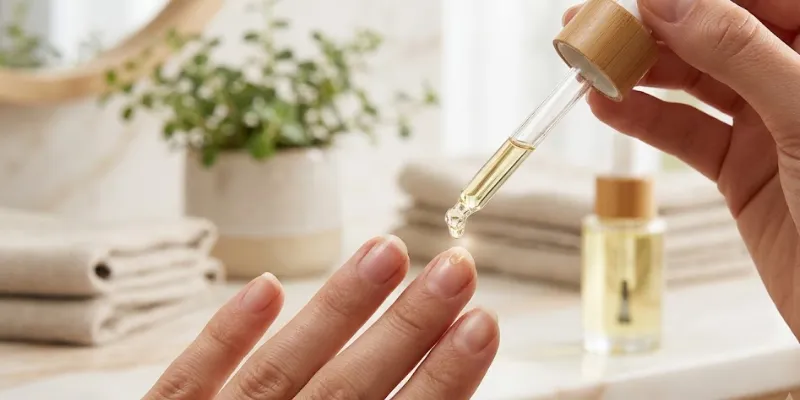
This is the single most misunderstood step in nail recovery. Most people reach for hand lotion when their nails feel dry. Lotions are primarily water-based they feel hydrating on application but evaporate within minutes and leave nothing behind to seal moisture in.
Nails need oil, not water. Oils specifically jojoba oil, squalene, castor oil, and vitamin E oil mimic the natural lipids that hold the nail plate’s keratin layers together. They penetrate the nail plate, rebuild the lipid layer, and restore both flexibility and layer cohesion.
How to apply correctly:
- Apply a drop of oil to each nail and the surrounding cuticle every morning and every night before bed
- After every handwash, dry your hands thoroughly and apply oil within 60 seconds — before moisture evaporates from the nail surface
- Apply oil before putting on gloves for wet tasks the warmth inside the glove drives deeper absorption
- At bedtime, apply a generous amount of oil, then wear thin cotton gloves overnight. This is the most effective single technique for rapid nail recovery
Step 3: Keep nails short during recovery
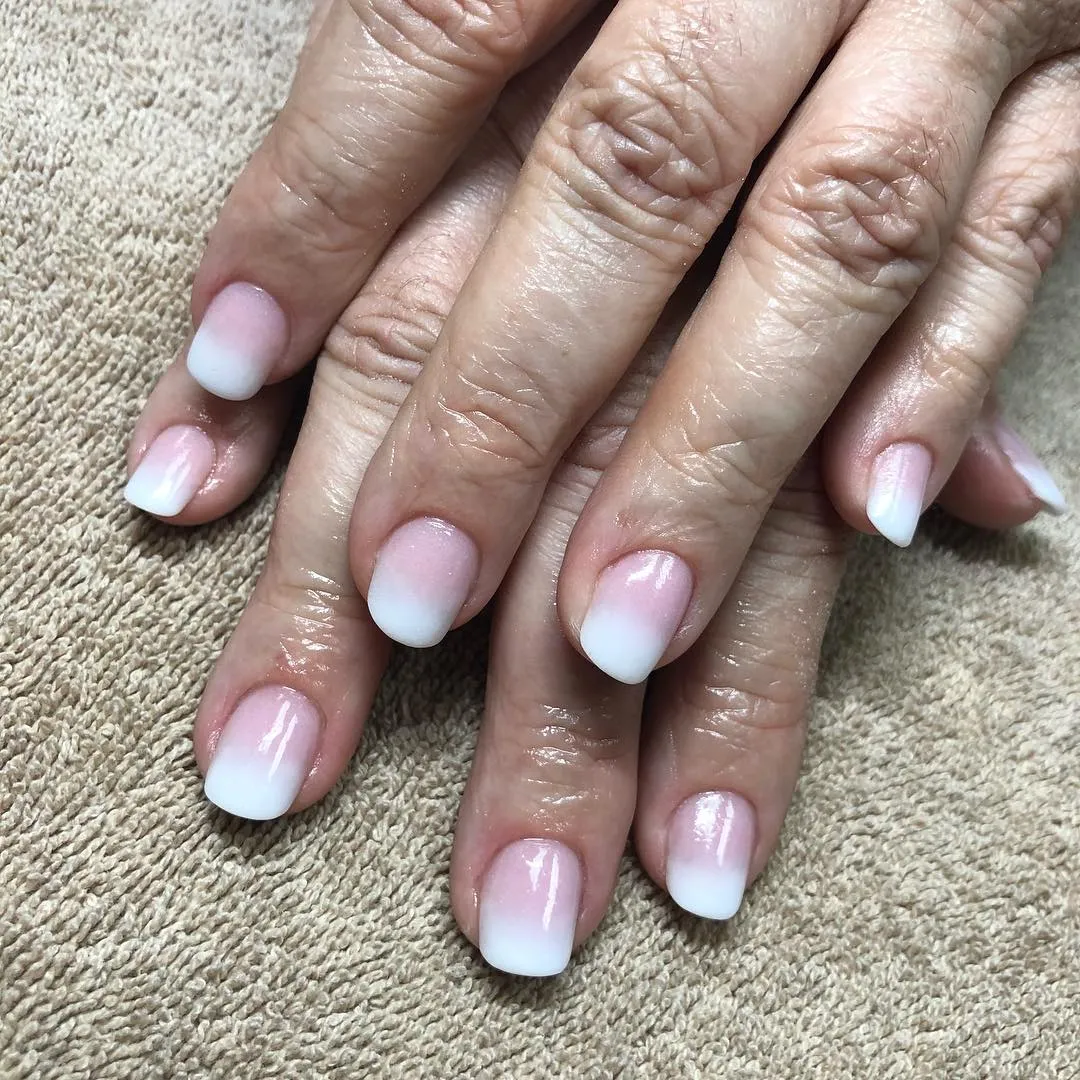
Long nails have more leverage and more surface area exposed to mechanical stress. A nail that is already weakened will break and peel far more readily at length than when kept short.
During the recovery period — typically 6 to 8 weeks — keep nails trimmed to just beyond the fingertip. This reduces the mechanical forces that cause breaking and removes the most damaged portion of the nail (always at the free edge) as it grows out.
File with a glass nail file rather than an emery board, using a single-direction stroke only. Back-and-forth filing creates microscopic serrations at the nail edge that act as starting points for both peeling and breaking.
Step 4: Address nutrition if external fixes are not enough
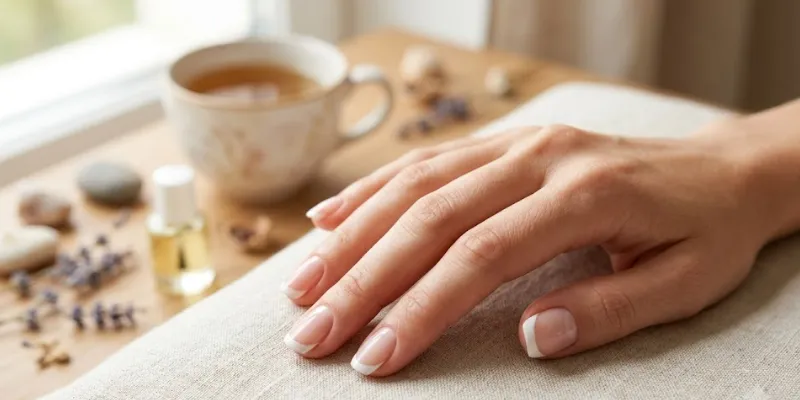
If you have consistently followed Steps 1 to 3 for 6 weeks and seen no meaningful improvement, the cause is likely nutritional or medical rather than external.
For iron deficiency:
- Eat iron-rich foods at every meal: lean red meat, white beans, lentils, spinach, fortified cereals
- Always combine iron-rich foods with a vitamin C source at the same meal this increases iron absorption by up to six times, according to research published in the American Journal of Clinical Nutrition
- Ask your doctor for a complete blood count and serum ferritin test to confirm deficiency before supplementing
- If confirmed, take a daily iron supplement at the dose your doctor recommends and allow 3 to 6 months for healthy nail regrowth
For biotin and zinc:
- Natural biotin sources: cooked eggs (especially the yolk), salmon, almonds, walnuts, avocado, whole grains, and mushrooms
- Natural zinc sources: oysters, pumpkin seeds, chickpeas, and cashews
- A biotin supplement of 2.5 to 5 mg daily may help if you have a genuine deficiency but discuss it with your doctor before starting, as high-dose biotin is known to interfere with thyroid blood tests and cardiac troponin assays, as flagged by the US Food and Drug Administration
Step 5: See a doctor if both fingernails and toenails are affected
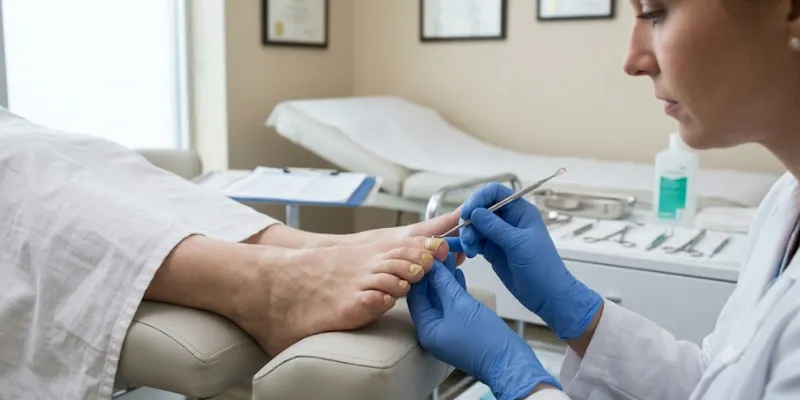
If your toenails are also breaking and peeling not just your fingernails the cause is almost certainly internal rather than environmental. External causes (water, chemicals, trauma) tend to affect whichever nails are most exposed to the damaging agent. Internal causes (nutritional deficiency, thyroid disorder, systemic disease) affect all nails simultaneously.
Book an appointment and ask your doctor to check: a complete blood count and serum ferritin (iron deficiency), TSH and free T4 (thyroid function), and zinc levels if your diet is restricted.
What Actually Works – Products and Ingredients
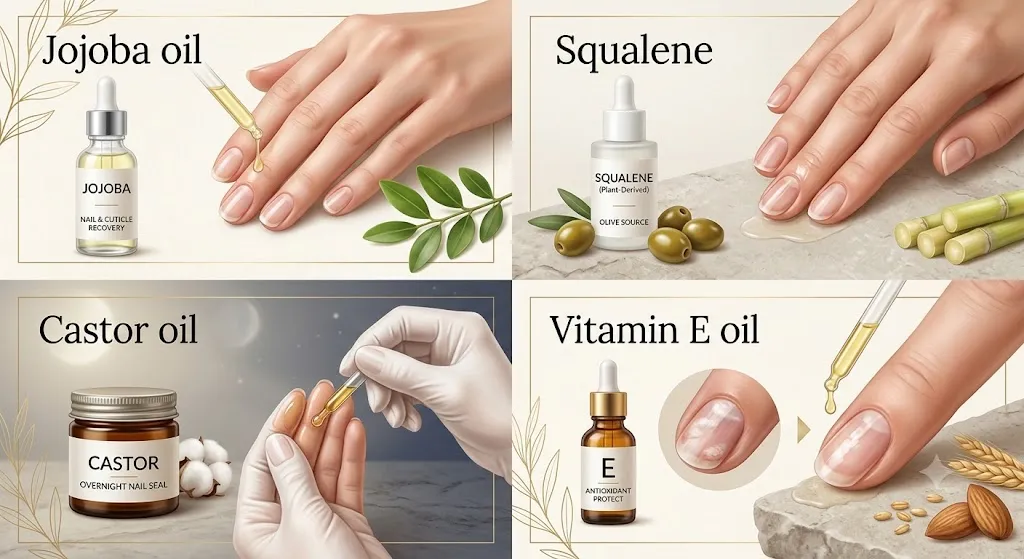
Oils that genuinely help
Jojoba oil is structurally the closest to the nail’s natural sebum. It absorbs quickly and does not leave a greasy residue — ideal for daytime use.
Squalene (derived from olive or sugarcane, not shark liver) is highly compatible with the lipid layer of both skin and nails. Dermatologists frequently recommend it for severely dry, peeling nails because of how efficiently it restores the surface barrier.
Castor oil is thicker and more occlusive — it seals moisture in rather than replacing it directly. Best used at night under cotton gloves for maximum effect.
Vitamin E oil provides antioxidant protection alongside moisture. Useful applied directly to the nail and cuticle, particularly after chemical exposure.
What to avoid
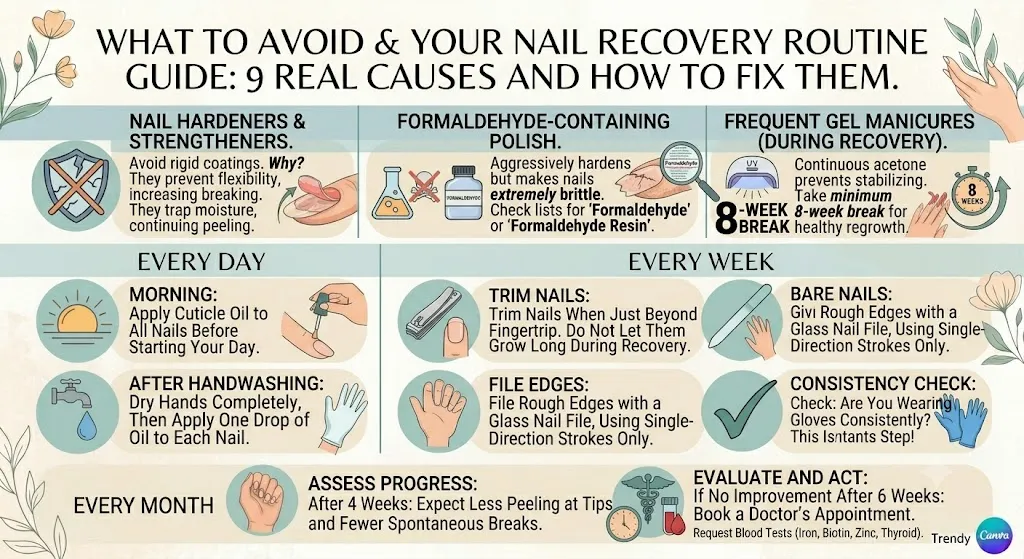
Nail hardeners and strengtheners marketed for brittle or peeling nails are among the most counterproductive products you can use during recovery. Most nail hardeners work by depositing a hard, plastic-like coating on the nail surface. This coating does not flex with the natural nail and because it is rigid, it can actually increase breaking by preventing the nail beneath from absorbing any impact. It can also trap moisture inside an already compromised nail, continuing the peeling cycle beneath the surface.
The exception is treatments containing hydrolysed keratin these can genuinely reinforce the nail’s own structure rather than sitting on top of it.
Formaldehyde-containing nail polishes harden the nail aggressively but make it more brittle over time, not more flexible. Avoid any nail product listing formaldehyde or formaldehyde resin in its ingredients.
Frequent gel manicures during recovery continue the acetone exposure cycle and prevent the nail plate from stabilising. Take a minimum 8-week break.
The Daily and Weekly Routine That Works
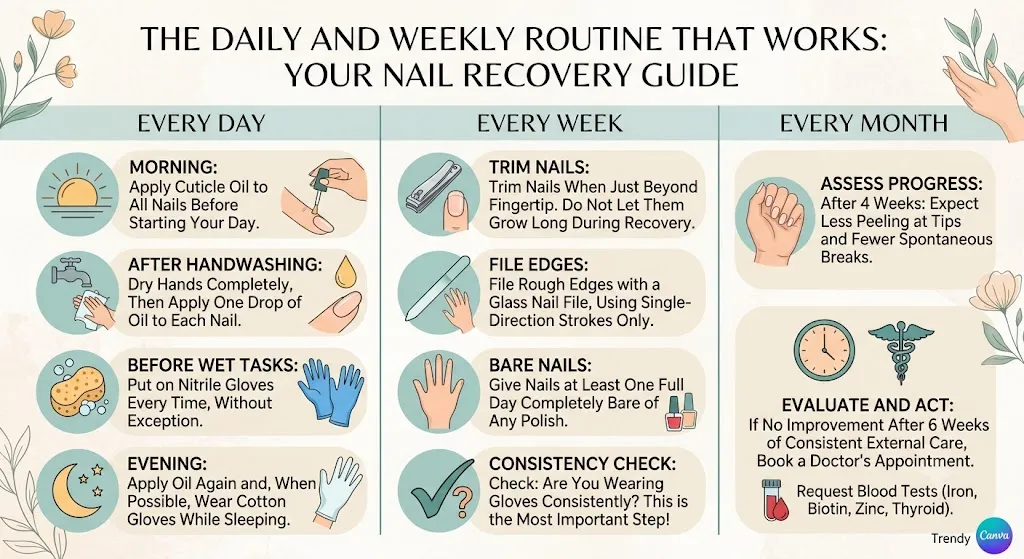
Every day
- Morning: apply cuticle oil to all nails before starting your day
- After every handwash: dry hands completely, then apply one drop of oil to each nail
- Before any wet task: put on nitrile gloves every time, without exception
- Evening: apply oil again and, when possible, wear cotton gloves while sleeping
Every week
- Trim nails when they reach just beyond the fingertip do not let them grow long during recovery
- File any rough edges with a glass nail file using single-direction strokes only
- Give nails at least one full day completely bare of any polish
- Check: are you wearing gloves consistently? This is the most commonly skipped step and the most important one
Every month
- Assess progress. After 4 weeks of consistent care, you should notice less peeling at the tips and fewer spontaneous breaks
- If no improvement after 6 weeks of consistent external care, book a doctor’s appointment and request the blood tests listed above
The Bottom Line
Nails that break and peel at the same time are sending a clear, specific signal they have lost both their flexibility and their structural cohesion. The causes of both problems are almost always the same — chronic dehydration from water and chemical exposure, nutritional gaps in iron or biotin, or in rarer cases an underlying medical condition affecting the nail matrix.
The fix is straightforward but requires consistency. Protect nails from water and chemicals with gloves. Replace lotion with oil applied after every handwash. Keep nails short during the recovery period. Eat iron-rich foods with vitamin C. And if you have been doing all of this for six weeks without improvement, ask your doctor to check your iron and thyroid levels.
Your nails can recover. They just need the right conditions — and a little patience while the new growth comes through.
Frequently Asked Questions
Fingernails grow approximately 3 millimetres per month, and a full nail replacement cycle takes around 6 months. However, most people notice a clear reduction in new breaking and peeling within 4 to 6 weeks of consistent care — the improvement in nail quality is visible as the new growth comes through from the base. The damaged portion at the tip takes longer to grow out and be trimmed away.
This is one of the most common nail myths. Nails do contain calcium, but calcium deficiency is rarely the cause of brittle or peeling nails in otherwise healthy adults — most people consume adequate calcium from their diet. Research has found no consistent link between low dietary calcium and nail fragility. Iron and biotin deficiency are far more commonly responsible for the nutritional causes of breaking and peeling.
Drinking more water improves overall hydration but has a limited direct effect on nail plate hydration. The nail plate does not rehydrate efficiently from the inside out — it absorbs moisture primarily from external contact. This is why applying oil topically is significantly more effective for nail recovery than increasing water intake alone.
A thin coat of regular nail polish can provide a small degree of mechanical protection. However, the removal process — particularly with acetone — undoes any protective benefit and leaves the nail drier than before. A breathable, non-acetone-requiring nail polish may offer a net benefit during recovery if you remove it carefully with a non-acetone remover. Gel polish and acrylic nails should be avoided entirely during recovery.
The three fastest and most impactful changes are: wearing nitrile gloves for all wet tasks (immediate protection from further dehydration), switching from lotion to jojoba or squalene oil applied after every handwash (begins restoring the lipid layer within days), and keeping nails trimmed short (removes the most mechanically vulnerable part of the nail). These three changes together typically produce visible improvement within 2 to 4 weeks.