How to File Nails Properly (Without Weakening Them)
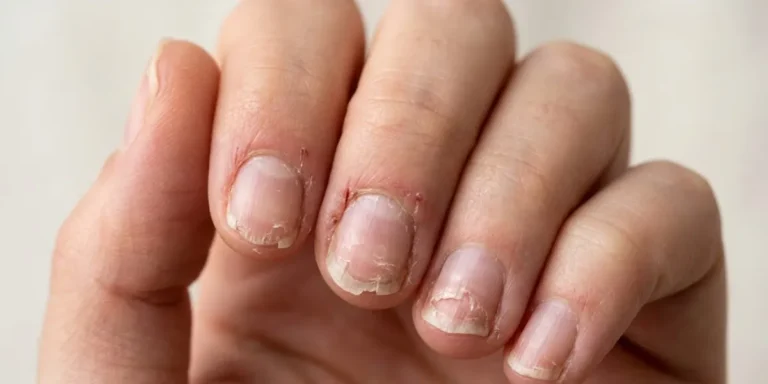
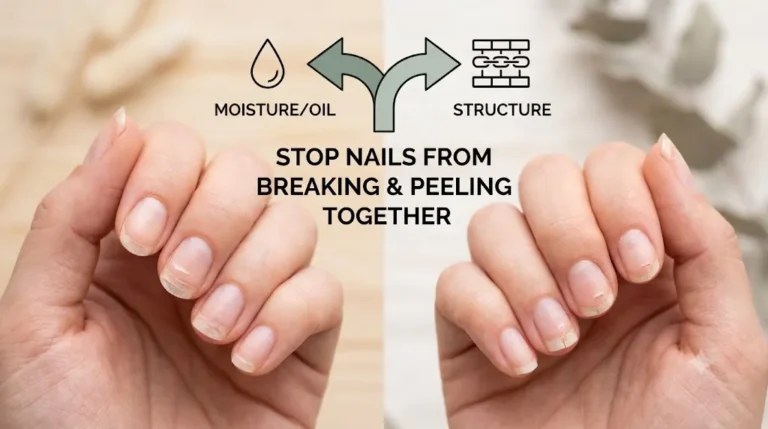
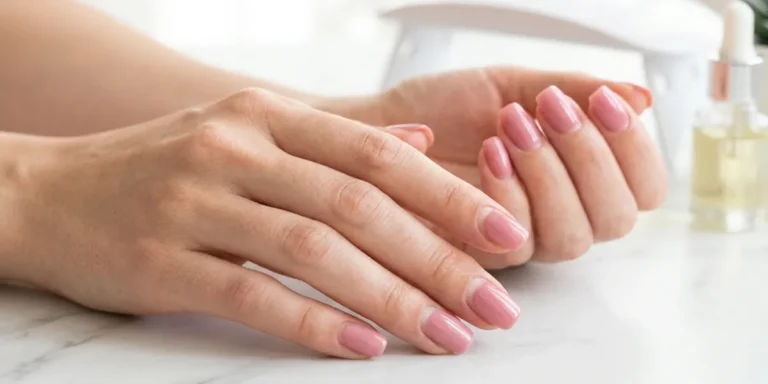
Do you constantly struggle with peeling, splitting, or snagging nails, no matter how many strengthening polishes or cuticle oils you use? It is incredibly common to blame genetics or label yourself as having naturally “weak nails,” but the actual culprit is likely hiding right in your manicure kit. Learning how to file nails properly is the single most important—yet most frequently misunderstood—step in achieving a healthy, resilient manicure.
Your natural nails are composed of delicate, stacked sheets of keratin, much like the layers of an onion. When you use the traditional “sawing” technique dragging a file vigorously back and forth across the tip—you generate intense friction and heat.
This aggressive motion violently shreds those fragile keratin layers at a microscopic level. While your nail might look smooth to the naked eye, its structural integrity at the edge has been severely compromised. This hidden damage is the true root cause of the unexpected splits and peeling that show up days later, which people mistakenly attribute to overall nail weakness.
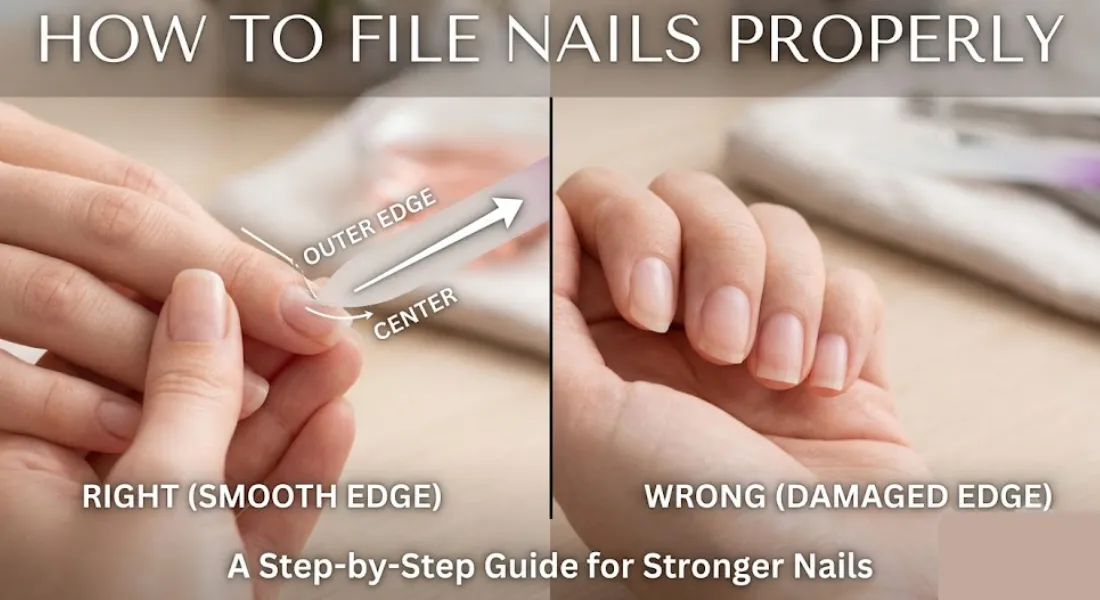
The secret to strong, beautiful nails is actually a surprisingly simple fix file in one direction only. By utilizing smooth, deliberate strokes from the outer edge toward the center of the nail, you cleanly shape the tip while keeping those crucial keratin layers sealed and intact.
In this comprehensive guide, we will break down the exact step-by-step technique on how to file nails properly without weakening them, the best tools to use, and how to finally stop the cycle of splitting and peeling for good.
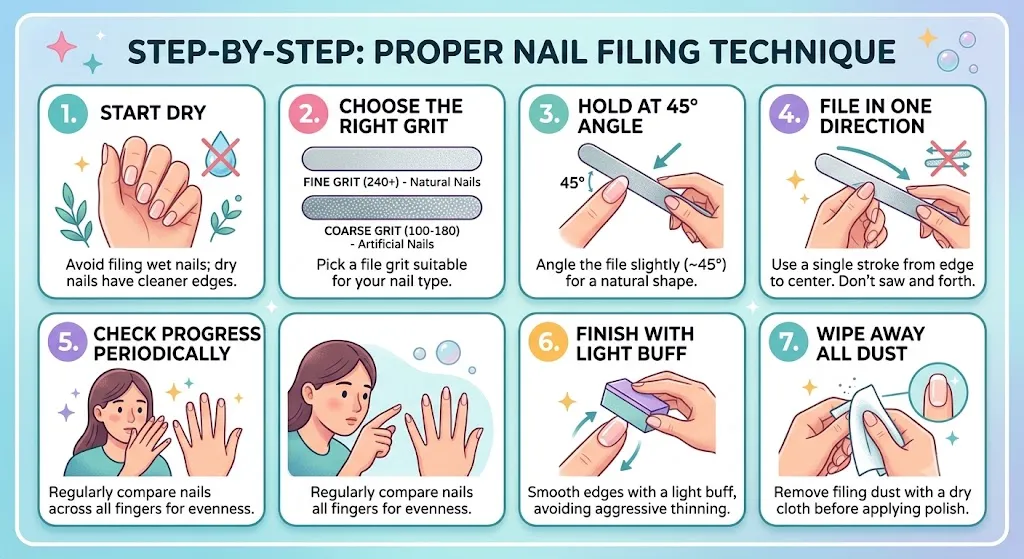
Step-by-Step – Proper Nail Filing Technique
1. Start with completely dry nails. Filing wet or freshly showered nails, when they’re temporarily softer, increases the risk of tearing or an uneven edge rather than a clean cut.
2. Choose the right grit for the job. A finer grit (240+) works genuinely well for shaping natural nails, while a coarser grit (100–180) is reserved specifically for filing down acrylic or gel-x before an acetone soak, where you actually want faster material removal from the enhancement.
3. Hold the file at a slight angle, roughly 45 degrees, against the nail edge rather than perfectly flat, which genuinely shapes the tip in a more natural-looking way.
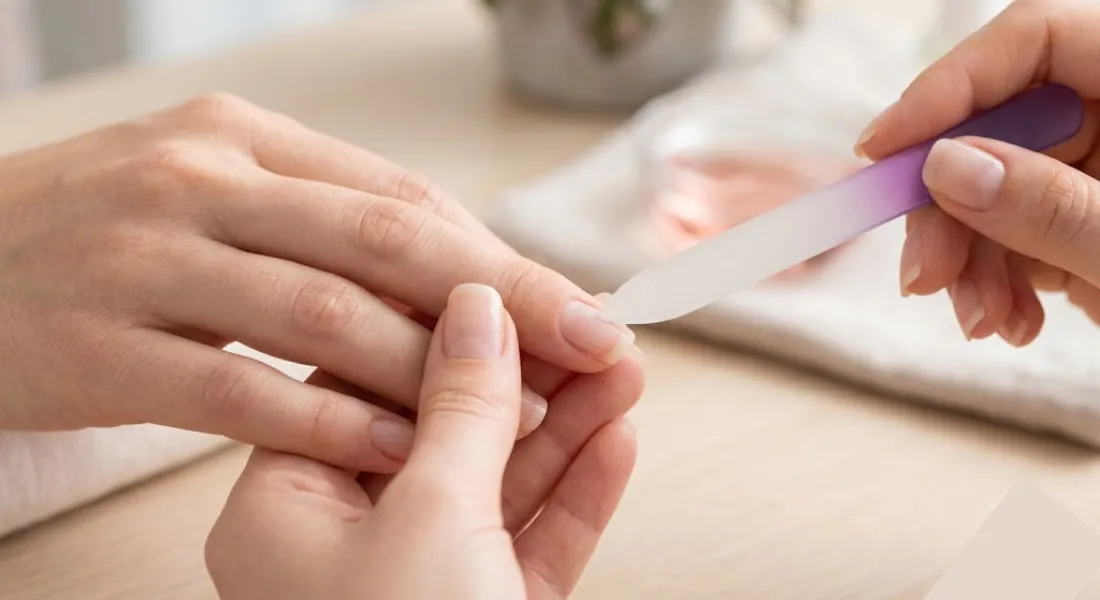
4. File in one direction, from edge to center. Lift the file after each stroke and reposition rather than dragging it back and forth repeatedly across the same spot.
5. Check your progress periodically by holding your hand up and comparing nail lengths and shapes across all fingers, rather than filing all the way through on one nail before checking the rest.
6. Finish with a light buff if you want extra smoothness, but avoid buffing too aggressively, since this thins the nail plate over repeated sessions and weeks.
7. Wipe away all filing dust with a clean, dry cloth before applying any polish, since leftover dust can prevent polish from adhering smoothly to the nail surface underneath.
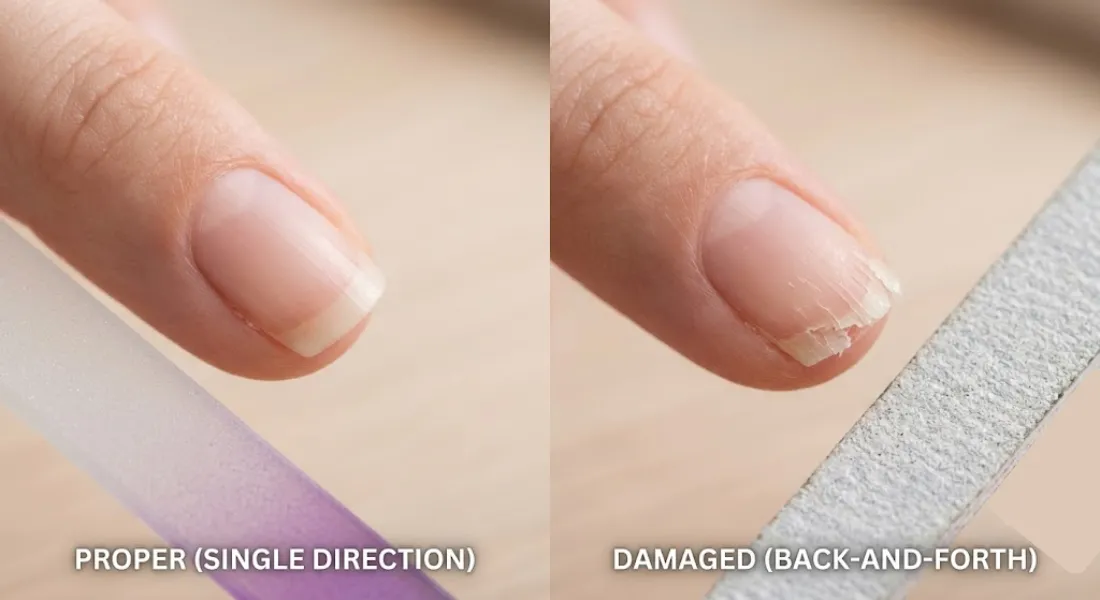
What Happens If You Skip Proper Technique
Nails filed with a sawing motion or the wrong grit for the job often develop subtle micro-splits at the edge that aren’t immediately visible but show up days later as an unexpected crack or peel.
This delayed effect is exactly why so many people blame “weak nails” generally when the real, fixable cause was simply filing technique used in a previous session.
Why the Back-and-Forth Motion Actually Damages Nails
Nails are made of layered keratin sheets, similar in structure to plywood. A sawing motion creates friction that can separate these layers at the microscopic level, weakening the edge even when the nail looks completely fine to the naked eye immediately afterward.
This hidden damage is often what shows up days or weeks later as an unexpected split, seemingly for no obvious reason the real reason was actually the filing technique used weeks before, not some sudden new weakness in the nail itself.
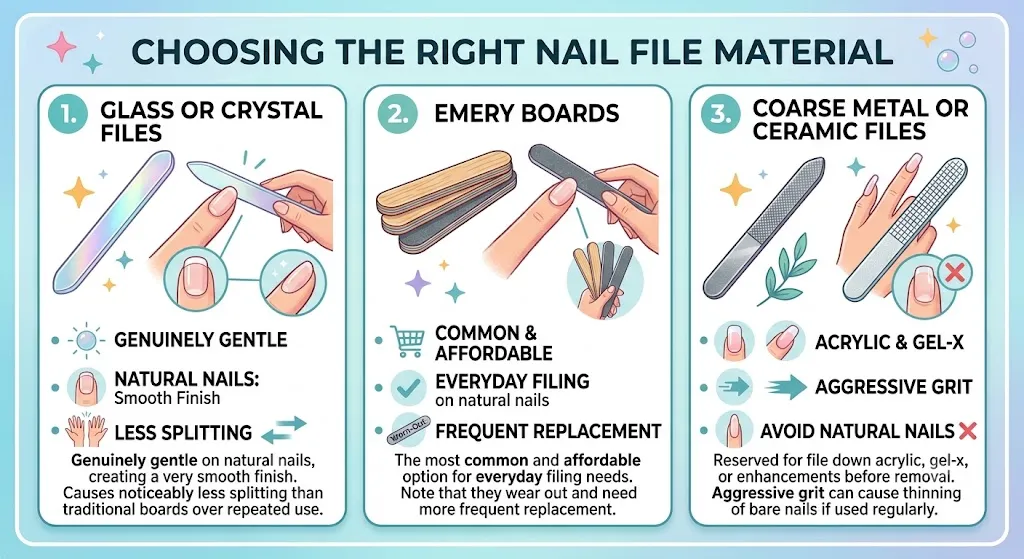
Choosing the Right Nail File Material
1- Glass or crystal files: Genuinely gentle on the nail edge and create a very smooth finish, making them a good choice for natural nails specifically, and many people find they cause noticeably less splitting than traditional emery boards over repeated use.
2- Emery boards: The most common and affordable option, suitable for most everyday filing needs on natural nails, though they do wear out and need replacing more frequently than glass or crystal alternatives.
3- Coarse metal or ceramic files: Best reserved for filing down acrylic, gel-x, or other enhancements before removal, since their aggressive grit is more than natural nails typically need and can cause unnecessary thinning if used on bare nails regularly.
Why Nail Techs Recommend Glass Files So Often
Professional nail techs frequently recommend glass or crystal files specifically because their consistent, fine abrasive surface creates a smoother edge with fewer of the microscopic layer-separations that a rougher emery board can sometimes cause, particularly on already-weakened or thin nails.
While more expensive upfront than a pack of emery boards, a quality glass file can last years with proper care, making it a reasonable investment for anyone filing nails regularly.
How Often Should You File Your Nails?
Filing as needed to maintain shape and smooth any minor snags is reasonable, but daily filing isn’t necessary and can contribute to unnecessary thinning over time if done too frequently.
Most people find filing every few days, alongside regular trims, keeps nails looking neat without overdoing it. If you notice your nails feeling unusually thin or flexible, cutting back on filing frequency for a few weeks and focusing on moisture instead is often a reasonable adjustment.
Filing Different Nail Shapes
The core one-direction technique applies regardless of shape, but the angle and amount of rounding at the corners changes the final look: a square shape keeps the corners sharp with a straight edge across, an oval rounds the corners more generously, and an almond shape tapers the sides inward toward a rounded point.
If you’re also dealing with a squarer natural shape and want it more rounded, our guide on how to file square nails covers that specific transition in more detail, including the tradeoffs between a sharper defined look and a softer, less snag-prone shape.
Filing Toenails Versus Fingernails
The same one-direction principle applies to toenails, though toenails are generally kept straighter across rather than heavily rounded or shaped, since a straighter edge specifically helps reduce the risk of ingrown nails developing at the corners over time. If ingrown nails have been a recurring issue for you, our dedicated guide on ingrown nail prevention and safe trimming covers the specific technique adjustments worth making for toenails.
FAQ
Does filing nails make them grow faster?
No — filing only shapes existing length it has absolutely no effect on the underlying growth rate happening at the nail matrix beneath the cuticle, since that process is governed entirely by biology rather than anything done to the visible nail plate.
Is it better to file or cut nails?
Both are genuinely fine when done correctly, though filing gives more precise control over final shape, while clipping is faster for removing significant length before final shaping and refinement with a file.
Can filing too often damage nails?
Yes, if done excessively — frequent, aggressive filing can genuinely thin the nail plate over time, similar to how excessive buffing can weaken nails when it’s overdone regularly across many sessions.
Why does my nail file keep snagging on my nails?
This usually means the file has worn smooth from repeated, extended use and genuinely needs replacing, since a worn-out file grips and pulls at the nail rather than cutting through the edge cleanly and smoothly, which can itself introduce the very splitting the right file would have avoided.
Should I file my nails before or after painting them?
Always before painting — filing after polish is already applied disturbs the fresh coat and can create an uneven, chipped-looking edge right where you just tried to clean it up moments earlier.
Is it safe to share a nail file with someone else?
It’s generally best avoided, since files can retain trace amounts of skin or nail debris between individual uses, creating a theoretical hygiene concern quite similar to sharing clippers between different people.
Can I use the same file for both fingernails and toenails?
It’s generally best avoided across hands and feet, given a somewhat higher risk of transferring fungal spores between the two if a file isn’t properly cleaned and disinfected between uses.